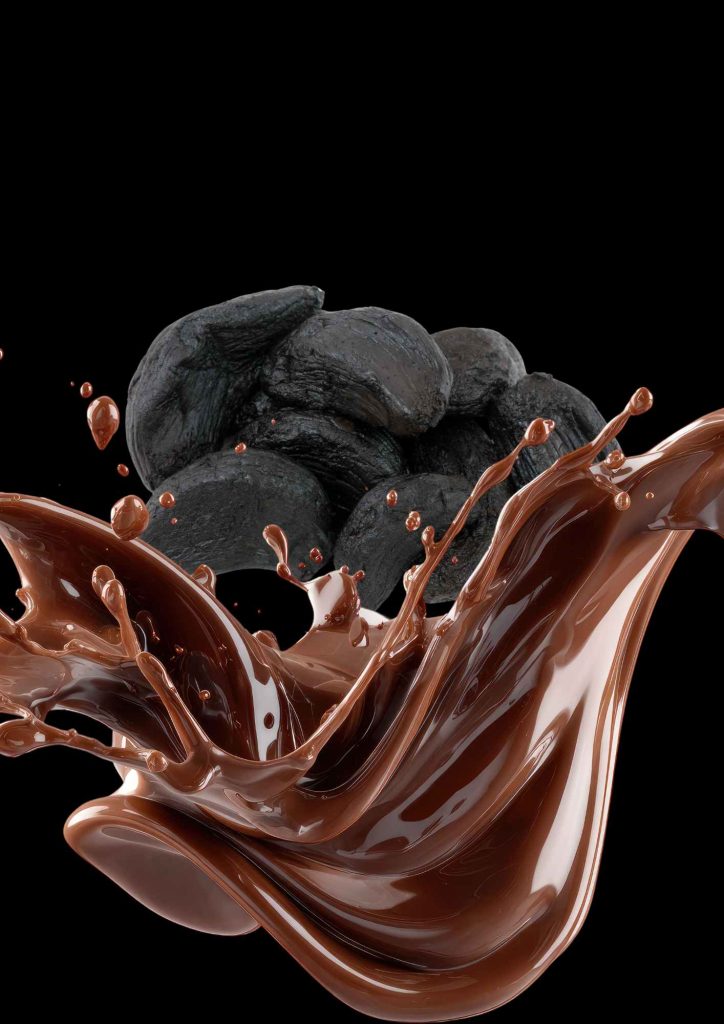
Black Garlic & Chocolate…..
Black Garlic has quietly become one of the most intriguing ingredients to enter the pastry kitchen, and its affinity with chocolate feels almost destined.
Chefs who work with food pairing — the practice of matching ingredients that share aromatic compounds — have long understood that unexpected combinations often yield the most memorable results.
Black garlic is one of those rare ingredients that reshapes the conversation.
A deeper, darker aromatic palette
Through its slow fermentation, Black Garlic loses the sharpness of its raw form and develops a concentrated sweetness reminiscent of molasses, black licorice, and aged balsamic.
These flavors don’t compete with chocolate; they echo its roasted, bitter, and fruity notes, creating a layered harmony that feels both modern and ancient.
Umami as a quiet architect
What makes Black Garlic truly compelling in pastry is its gentle umami.
Rather than announcing itself, it settles into the background, deepening the chocolate’s structure and adding a warm, almost resonant undertone.
It’s the kind of subtle enhancement that pastry chefs rely on when they want a dessert to feel more dimensional without becoming heavier.
Texture that invites experimentation
With a soft, sticky texture similar to a dried fruit, Black Garlic behaves beautifully in chocolate desserts.
Folded into brownies, blended into a mousse, or incorporated into a cheesecake base, it brings a tactile contrast that feels intentional rather than gimmicky.
A natural balancer of bitterness
Baristas have already embraced Black Garlic for its ability to soften the bitterness of specialty coffees.
In chocolate, it performs a similar role, revealing hidden aromatic notes while contributing its own quiet sweetness and acidity.
Used thoughtfully, Black Garlic turns chocolate pastry into something richer and more nuanced — a dessert that lingers, both for its flavor and for the unexpected elegance of the ingredient behind it.