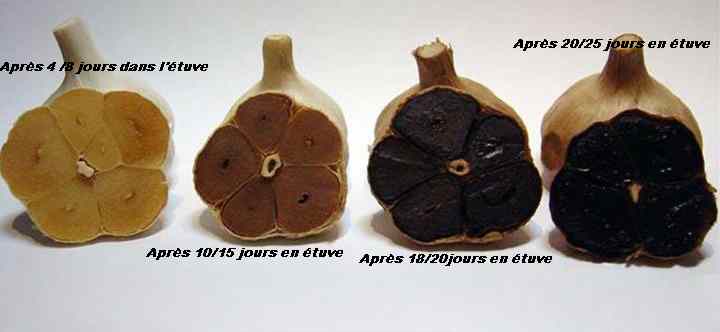
It is sometimes described as fermented, sometimes candied, sometimes the result of an Asian secret. In reality, black garlic is born from something far more elegant: time, gentle heat, and humidity working together—no additives, no shortcuts.
Everything begins with high-quality whole white garlic, still wrapped in its papery skin. For several weeks, it is kept at a steady warm temperature in a humid environment. No microorganisms are added. This is not fermentation in the strict sense, but a Maillard reaction—the same natural process that gives bread its crust or roasted meat its deep color.
Gradually, the garlic’s natural sugars and amino acids interact, darken, and transform. The cloves turn a deep black, their texture becomes soft and almost jam-like. The sharp smell fades away, replaced by notes of balsamic vinegar, dried fruit, and sometimes licorice.
What makes black garlic so special is the patience it demands. Nothing can be rushed without losing its soul. Black garlic is a culinary lesson: when time is allowed to do its work, the ordinary becomes exceptional.